Hello
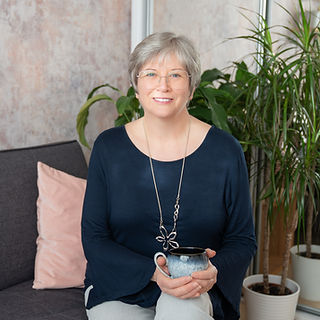
I'm Suzanne.
And if you've spent any time exploring Reconnecting You, you've probably realised something.
I don't believe people are broken.
I believe many people have simply spent so long adapting, coping and carrying that they've gradually lost touch with themselves.
Helping people reconnect with themselves has quietly become my life's work.


How I found this work
I didn't set out to specialise in chronic fatigue.
Like many people, I arrived here by following my curiosity.
Again and again I met capable, intelligent women whose lives had quietly become smaller because of exhaustion.
The more I listened, the more I realised fatigue was rarely just about energy.
It was about everything the nervous system had been carrying for years.
That curiosity led me through kinesiology, nervous system work, trauma-informed approaches and Traumatic Incident Reduction (TIR).
Each piece helped me understand something different.
Eventually they came together to form what is now Reconnecting You.
Not a collection of techniques.
A different way of understanding people.
How I work
If we ever work together, you'll probably notice something.
I don't rush.
I don't believe in fixing people.
And I don't believe lasting change comes from pushing harder.
Instead...
we create enough space to notice.
To become curious.
To understand.
To choose.
Sometimes that means practical strategies.
Sometimes thoughtful conversations.
Sometimes quietly noticing something that has been there all along.
Whatever we're exploring, we'll do it together, at a pace that feels manageable.


A little more about me
Outside work...
I love being with people. Not in a huge crowd, but a smaller group, where everyone gets a chance to chat, to share, and to connect.
I enjoy learning.
Thinking.
Walking.
Conversations over a cup of tea.
I love understanding how people work—not just biologically, but emotionally.
That curiosity about what makes us tick means that I'm usually reading or listening to a book or course that has caught my attention. I want to understand more of myself, to unpick what's going on, and perhaps then make changes and tweaks that move me to where I want to be.
I know from my own experiences that the most important conversations have happened when people feel safe enough to be completely themselves.
And I feel very humbled by the privilege of walking alongside people as they go through similar process and reconnect with themselves.